
Introduction
Struggling to get your website noticed? You’re not alone. For many newcomers, SEO feels confusing, frustrating, and even a little intimidating. But here’s the good news — mastering the basics is easier than you think.
This SEO guide for beginners breaks everything down into simple, practical steps. By the end of this powerful and easy-to-follow guide, you’ll know exactly how to boost your rankings, attract consistent traffic, and grow your online presence with confidence.
What Is SEO?
SEO, or Search Engine Optimization, is the process of improving your website so it ranks higher on search engines like Google. When you appear at the top of search results, you gain more visibility, more clicks, and more opportunities to grow your business or personal brand.
This SEO guide for beginners focuses on the essential elements that help your website perform better and stand out from the competition.
Understanding SEO is crucial — especially if you’re just starting out.
- 93% of online experiences begin with a search engine.
- 75% of users never scroll past the first page of search results.
- SEO is cost-effective, offering long-term benefits that paid ads cannot match.
For those new to digital marketing, learning the core principles in this SEO guide for beginners can dramatically transform your results.
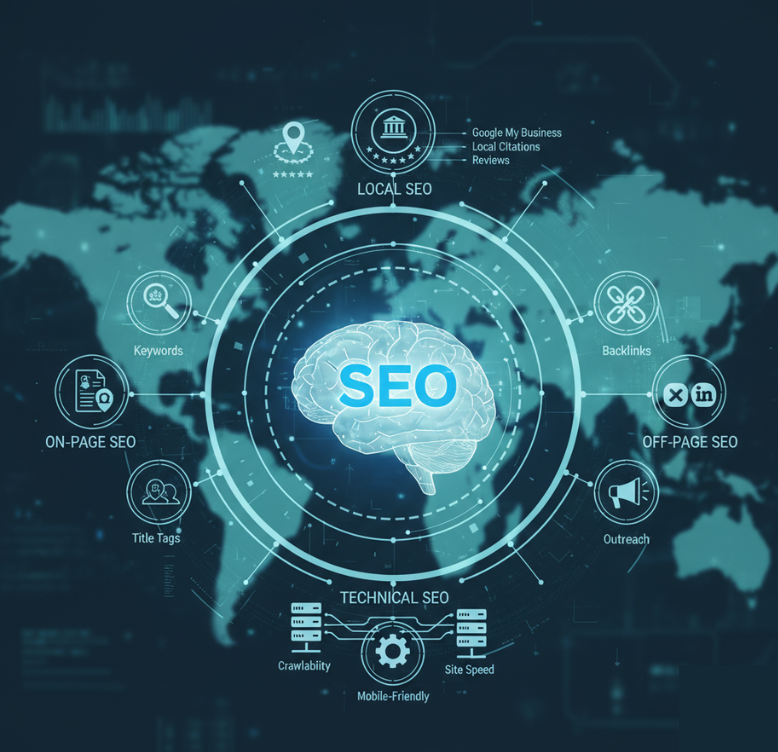
On-Page SEO: Optimizing Your Content for Maximum Impact
On-page SEO includes all the elements you can control directly on your website. Getting this right is essential for ranking higher.
1. Keyword Research -Seo guide for beginners
- Use tools like Google Keyword Planner and Ubersuggest to find opportunities.
- Target long-tail keywords such as “best running shoes for flat feet.”
- Include your focus keyword — SEO guide for beginners — naturally throughout your content.
2. High-Quality Content
- Write valuable, original, and insightful content.
- Answer user questions clearly.
- Use organized formatting with H1, H2, and H3 headings.
- Keep paragraphs short and readable.
3. Meta Tags
- Title Tag: Keep it under 60 characters and include your keyword.
- Meta Description: Write a compelling summary under 160 characters with strong emotional or positive power words.
4. URL Structure
- Keep URLs clean, descriptive, and keyword-rich (e.g., yourwebsite.com/seo-guide-for-beginners).
5. Internal Linking
- Link to other relevant pages to boost engagement and increase crawlability.
Off-Page SEO: Building Trust and Authority
Off-page SEO focuses on improving your site’s authority and reputation through external signals.
1. Backlinks
- Earn links from trusted, high-authority websites.
- Use guest blogging, digital PR, and shareable content to attract links.
2. Social Media Engagement
- Share your content regularly.
- Engage with your audience to build credibility and brand awareness.
3. Online Directories
- List your business on platforms like Google My Business, Yelp, and Bing Places.
Local SEO: Reaching the Right Audience in Your Community
Local SEO boosts your visibility to people searching within your area — essential for service-based or location-based businesses.
1. Google My Business Optimization
- Add accurate details, high-quality photos, and fresh content.
- Respond to reviews to improve trust signals.
2. Local Keyword Targeting
Use search terms like:
- “Best coffee shop in [City]”
- “Affordable plumber near me”
3. Customer Reviews
- Encourage satisfied customers to leave positive reviews on Google and other platforms.
Technical SEO: Enhancing Performance Behind the Scenes
Technical SEO helps search engines understand, crawl, and index your site efficiently.
1. Improve Site Speed
Use tools like PageSpeed Insights to fix slow-loading pages. Faster websites achieve stronger rankings.
2. Mobile Optimization
Ensure your website is fully responsive and user-friendly across all devices.
3. Secure Your Website (HTTPS)
Use SSL certificates to protect user data and gain trust from both visitors and Google.
4. XML Sitemap
Submit your sitemap through Google Search Console to help search engines discover your pages quickly.
SEO Checklist for Beginners
Here’s a simple yet powerful checklist to guide your journey:
✅ On-Page SEO
- Use your focus keyword SEO guide for beginners in key locations.
- Write high-quality, authoritative content.
- Optimize images with descriptive alt text.
- Add relevant internal links.
✅ Off-Page SEO
- Build reputable backlinks.
- Increase your social media presence.
- Add your business to trusted directories.
✅ Local SEO
- Optimize Google My Business.
- Use local keywords.
- Encourage customer reviews.
✅ Technical SEO
- Improve loading speed.
- Ensure mobile-friendliness.
- Use HTTPS security.
- Submit an XML sitemap.
Conclusion
SEO doesn’t have to be overwhelming. By applying the strategies in this SEO guide for beginners, you’ll take meaningful steps toward improving your visibility, gaining organic traffic, and outperforming your competitors. Start with small improvements, track your progress, and keep learning — your website’s success is just a few optimizations away.
Ready to take your SEO to the next level? Start implementing these proven techniques today and watch your rankings rise!