
Understanding the digital marketing landscape can feel overwhelming, especially when faced with acronyms like SEO and SEM. While these terms are often used interchangeably, they represent distinct strategies that can dramatically impact your online visibility. In this comprehensive guide, we’ll explore SEO vs SEM: The Key Differences to help you make informed decisions for your digital marketing strategy.
What is SEO?
Search Engine Optimization (SEO) is the practice of optimizing your website to rank higher in organic search results. This involves improving various elements of your site, including content quality, technical structure, and backlink profile. SEO focuses on earning traffic naturally without paying for ads, making it a long-term investment in your online presence.
The primary goal of SEO is to make your website more attractive to search engines like Google, Bing, and Yahoo. By following best practices and creating valuable content, you can improve your rankings and attract qualified visitors who are actively searching for your products or services.
What is SEM?
Search Engine Marketing (SEM) encompasses all marketing efforts to increase visibility in search engines, including both paid and organic strategies. However, in modern usage, SEM typically refers to paid search advertising, such as Google Ads or Microsoft Advertising. When discussing SEO vs SEM: The Key Differences, we’re primarily comparing organic optimization versus paid search campaigns.
SEM allows businesses to place ads at the top of search results pages, ensuring immediate visibility for specific keywords. Advertisers bid on keywords and pay each time someone clicks their ad, following a pay-per-click (PPC) model.
The Core Differences Between SEO and SEM
Cost Structure
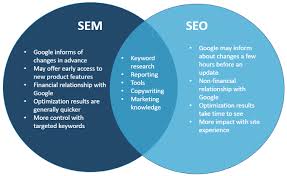
One of the most significant aspects of SEO vs SEM: The Key Differences lies in their cost models. SEO requires investment in content creation, technical optimization, and link building, but you don’t pay for each click or visitor. Once your content ranks, it continues generating traffic without ongoing per-click costs.
SEM operates on a pay-per-click basis, meaning you’re charged each time someone clicks your ad. While this provides immediate results, costs can accumulate quickly, especially in competitive industries where keyword bids are high.
Time to Results
SEO is a marathon, not a sprint. It typically takes three to six months to see significant results, and achieving top rankings can take even longer. However, once established, organic rankings tend to be more stable and sustainable.
SEM delivers instant visibility. Your ads can appear at the top of search results within hours of launching a campaign, making it ideal for time-sensitive promotions or new product launches.
Sustainability and Longevity
When examining SEO vs SEM: The Key Differences in terms of sustainability, SEO emerges as the more enduring strategy. Quality content that ranks well can continue driving traffic for years with minimal maintenance. Your organic presence builds equity over time.
SEM provides visibility only as long as you’re willing to pay for it. The moment you pause your campaigns, your ads disappear, and the traffic stops. This makes SEM a less sustainable long-term solution on its own.
Click-Through Rates
Research consistently shows that organic search results receive higher click-through rates than paid ads. Many users skip past advertisements to click on organic results, viewing them as more trustworthy and relevant. This is an important consideration in the SEO vs SEM: The Key Differences debate.
However, SEM allows you to occupy multiple positions on the search results page and use ad extensions to make your listings more prominent and informative.
Control and Flexibility
SEM offers greater control over your messaging, targeting, and budget. You can adjust bids, pause campaigns, test different ad copy, and target specific demographics, locations, and devices with precision.
SEO provides less immediate control. You can optimize your content and structure, but ultimately, search engines determine your rankings based on complex algorithms. You cannot guarantee specific positions or instantly change your organic visibility.
Which Strategy is Right for Your Business?
The answer to SEO vs SEM: The Key Differences isn’t about choosing one over the other but understanding when to use each strategy. Most successful digital marketing campaigns incorporate both approaches.
Choose SEO When:
- You’re building long-term brand authority
- You have a limited ongoing advertising budget
- Your industry has reasonable organic competition
- You can invest time in content creation and optimization
Choose SEM When:
- You need immediate visibility and traffic
- You’re launching time-sensitive campaigns
- You want to test keywords before committing to SEO
- Your business model supports the cost-per-click investment
The Power of Integration
The most effective approach combines both strategies. Use SEM to generate immediate traffic and test which keywords convert best, then invest in SEO for those high-performing terms to build long-term organic visibility. This integrated approach maximizes your search engine presence while managing costs effectively.
Understanding SEO vs SEM: The Key Differences empowers you to allocate resources wisely and create a balanced digital marketing strategy. SEM provides quick wins and valuable data, while SEO builds sustainable growth and brand credibility.
Conclusion
Both SEO and SEM play crucial roles in digital marketing success. SEO offers cost-effective, long-term growth, while SEM delivers immediate results and precise targeting. By understanding SEO vs SEM: The Key Differences, you can develop a comprehensive strategy that leverages the strengths of both approaches, maximizing your online visibility and driving sustainable business growth.
The key is to assess your specific business goals, budget, and timeline, then create a balanced approach that positions your brand for both immediate impact and long-term success in the competitive digital landscape.